ISS HTV-8 Launch to Carry New Batteries and Experiments in Anticipation of Lunar-Capable HTV-X
|
MONDAYHighlights…
|
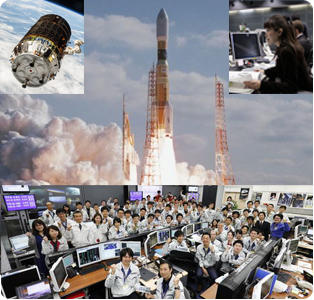 The 8th Japan ‘Kounotori’ (Stork) H-2 Transfer Vehicle (HTV-8) launch is scheduled for September 10 atop H-2B booster from Tanegashima Space Center to ISS. HTV-8 carries 3,400 kg payload in a pressurized compartment and 1,900 kg of unpressurized payload. It will deliver 6 new 200-kg lithium-ion batteries to replace older nickel-hydrogen batteries for ISS power during times of low sunlight. Among the JAXA experiments aboard Kounotori is Hourglass, which will investigate the behavior of small dust particles in reduced gravity. To prepare for docking, ISS crew have completed checkout of the Proximity Communication System (PROX) to be used for contact with HTV-8. On October 21 Northrop Grumman Cygnus NG-12 will be launched to ISS aboard an Antares launcher. The Cygnus module is selected by NASA in a sole-source contract as the basis for a lunar orbital habitat. In Oct Boeing plans an uncrewed launch of Starliner on an Atlas V to ISS, vying with SpaceX to be first to return astronauts to space in an American spacecraft. HTV-9, planned for Feb 2020, will carry 6 more lithium-ion batteries and the Australia CUAVA-1 satellite. The new HTV-X, planned to fly in Feb 2022, will be able to carry 5,800 kg of payload. With a larger electrical capacity, HTV-X is also designed to transport goods to lunar orbit in support of Moon exploration. (Image Credits: JAXA)
 Sep 9 —
  Sep 9 — NewSpace: Germany
  Sep 9 — USA: NASA
 = All times
for terrestrial events in local time unless noted.
 = All times for international terrestrial events in local time unless noted.
 = All times for space events, and…
 = All times for international space / astro events in Hawaii Standard Time unless noted. Add 10 hours to obtain UT (‘Universal Time’).
Weekly Planet Watch – Evening Planets: Jupiter (SW), Saturn (SE); Morning Planets: Uranus (E), Neptune (SE).
Revitalized American Space Movement on Display as Space Studies Institute and American Astronautical Society Convene
|
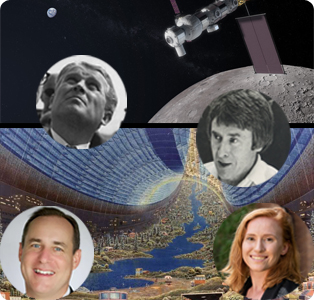
Sep 9-10 — Space Studies Institute, Seattle WA: SSI 50: The Space Settlement Enterprise; at Museum of Flight.
Continued from…
TUESDAY
|
Sep 10 — W. M. Keck Observatory, Rob and Terry Ryan Foundation, Kamuela HI: Lecture: In Search of the Ultimate Ruler – The Grand Challenge of Distances in Astronomy; by John O’Meara, W. M. Keck Observatory Chief Scientist; at Gates Performing Arts Center at the Hawaii Preparatory Academy, 19:00.
Sep 10 — University of Arizona, Lunar and Planetary Laboratory, Tucson AZ: Lecture: The Origin of the Moon Within a Terrestrial Synestia; by Dr. Simon Lock from Caltech, 15:45.
Sep 10-12 — American Astronautical Society, Huntsville AL: AAS Wernher von Braun Memorial Symposium: Exploration is the Work of Generations; to discuss a variety of topics including technology, science, exploration, commercialization, national security, more.
Sep 10-12 — The National Academies of Sciences, Engineering and Medicine, Irvine CA: Committee on Astrobiology and Planetary Science Meeting.
Sep 10 — Apollo Asteroid 2019 QY4: Near-Earth Flyby (0.006 AU)
Sep 10 — Apollo Asteroid 2019 RH: Near-Earth Flyby (0.018 AU)
WEDNESDAY
Sep 11 — British Interplanetary Society, London, United Kingdom: Lecture: The UK Space Science Programmes; by Chris Lee of UK Space Agency.
Sep 11-13 — IRAP, CNRS, Midi-Pyrenees Observatory (OMP), University of Toulouse, Toulouse, France: Planetary Exploration Horizon 2061 Synthesis Workshop.
Sep 11-13 — ESA, Rome, Italy: Asteroid Impact Deflection Assessment (AIDA) International Workshop.
Sep 11-13 — Luxembourg Space Agency, University of Luxembourg, von Karman Institute for Fluid Dynamics, et al, Luxembourg City, Luxembourg: 11th European CubeSat Symposium.
Sep 11-13 — Astronomical Society of Japan, Kumamoto, Japan: Astronomical Society of Japan 2019 Fall Meeting.
THURSDAY
Sep 12 — 57th Observation John F. Kennedy Moon Speech & 27th Observation 1st African-American Woman in Space, USA / Worldwide: As the World looks forward to the First Woman on the Moon and a Human Return to Moon, observations made today for 57th anniversary of Kennedy Moon speech (1962) and to celebrate the 27th anniversary of Astronaut Mae Jemison becoming first African-American Woman in Space (1992).
Sep 12 — Department of Commerce Boulder Laboratories, DOC Office of Space Commerce, University of Colorado Boulder, Boulder CO: Space Commerce Workshop.
Sep 12 — SpaceQ Intel, Satellite Canada Innovation Network Inc, Ottawa, Ontario, Canada: Canada Space Regulatory Roundtable.
Sep 12 — Cornell University, Ithaca NY: Lecture: The Globular Cluster System of NGC 4258: A Relic of Cosmic High Noon? by Rosa Gonzalez from National Autonomous University of Mexico (UNAM).
FRIDAY
Sep 13 — Juno, Perijove 22 / 21st Science Flyby, Jupiter Orbit: NASA craft in 53-day orbit to come within ~3,500 km of Jupiter cloud tops during Perijove 22, its 22nd close flyby of Jupiter and 21st science flyby with instruments turned on.
Sep 13-15 — Icarus Interstellar, San Diego CA: Starship Congress 2019: Bend Metal; 4th annual conference, at San Diego Air & Space Museum.
Sep 13-15 — European Space Foundation, Mars Society Polska, Kielce University of Technology, et al, Kielce, Poland: European Rover Challenge.
Sep 13 — Moon: At apogee (distance 406,352 km), 03:00; 3.4° SSE of Neptune, 11:00; Full (Harvest Moon), 18:34.
Sep 13 — Mercury: 0.29° SSW of Venus, 04:00.
Sep 13 — Apollo Asteroid 2013 CV83: Near-Earth Flyby (0.035 AU)
Sep 13 — Apollo Asteroid 2013 CV83: Near-Earth Flyby (0.041 AU)
SATURDAY
Sep 14 — Peninsula Astronomical Society, Los Altos Hills CA: Lecture: Getting the Astronomy Right in a Novel – the Journal of Irreproducible Results, the science humor magazine; by Norm Sperling, 19:30.
Sep 14-16 — Japan Agency for Medical Research and Development and the New York Academy of Sciences, NYC NY: The Interstellar Initiative: 2019-2020; “Aligning Young Stars of Science to Tackle the World’s Most Critical Medical Challenges”.
Sep 14 — Amor Asteroid 467317 (2000 QW7): Near-Earth Flyby (0.036 AU)
Sep 14 — Apollo Asteroid 504800 (2010 CO1): Near-Earth Flyby (0.036 AU)
SUNDAY
Sep 15-20 — EPS, Europlanet Society, Geneva, Switzerland: European Planetary Sciences (EPS) Congress Division for Planetary Sciences Joint Meeting 2019.
Sep 15-20 — University of Vienna and Electric Rocket Propulsion Society, Vienna, Austria: 36th International Electric Propulsion Conference; expecting ~500 people representing 25 countries.
Sep 15 — Apollo Asteroid 2019 JF1: Near-Earth Flyby (0.029 AU)
